

Dubai’s construction and real estate sectors reached historic heights in the third quarter of 2026, driven by a monumental wave of investment and frantic build paces. The market continues its record-breaking momentum, highlighted by a massive surge in market transactions and developers delivering tens of thousands of new residential units to keep pace with global investor demand. According to recent data from the Dubai Land Department (DLD), the city’s construction framework is shifting from a pure launch-driven ecosystem to a highly mature delivery phase, with over 104 mega-projects worth over AED 111 billion ($29.3 billion) successfully completed earlier this year to pave the way for Q3’s thriving secondary and ready-property market volumes.
The third quarter also bore witness to multi-billion dollar master contracts
The third quarter also bore witness to multi-billion dollar master contracts and iconic new project advancements that are rapidly redefining the emirate’s skyline. Among the most prominent developments, China State Construction Engineering Corporation (CSCEC) secured a staggering $1.36 billion contract from Dubai Holding to build its new corporate headquarters alongside the Jumeira Residences Emirates Towers. Simultaneously, master developer Nakheel accelerated its waterfront expansion on the Dubai Islands by awarding an AED 800 million ($218 million) contract for luxury residential towers, while major developers like Binghatti and Sobha registered massive new master-planned communities to capture the relentless appetite for premium off-plan housing.
Infrastructure expansions approved this quarter are acting as the primary catalyst
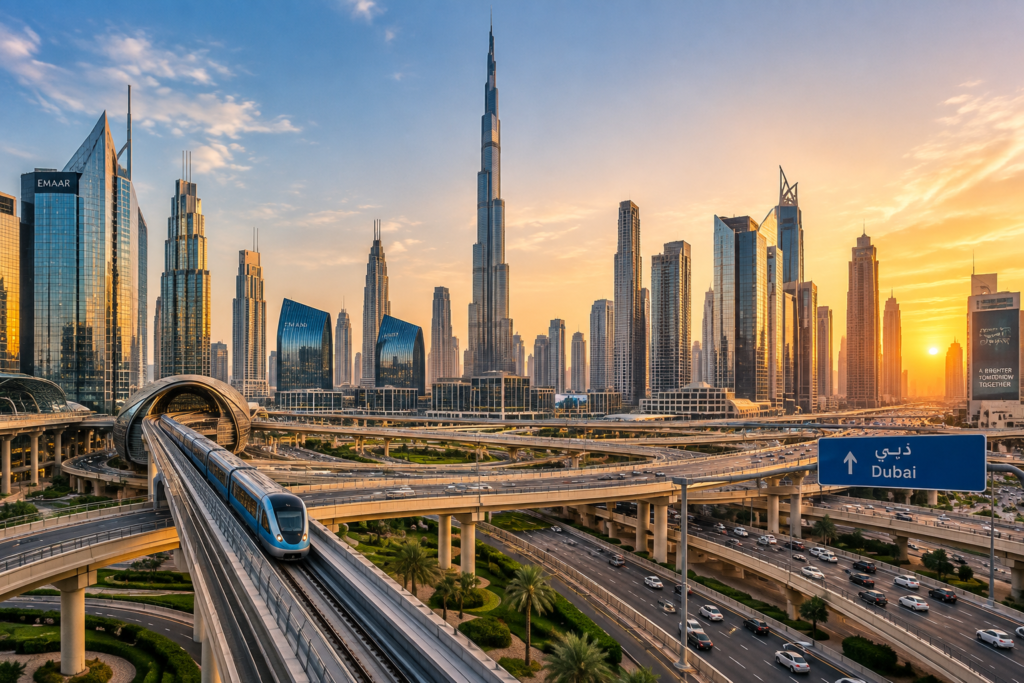
Infrastructure expansions approved this quarter are acting as the primary catalyst for this real estate boom, anchoring long-term investor confidence. The government greenlit a massive AED 3.5 billion regional transport corridor stretching 80 kilometers to seamlessly connect Abu Dhabi, Dubai, and Sharjah, heavily boosting logistics and accessibility around emerging construction hubs like the Al Maktoum International Airport district. With more than 75% of the 564,000 homes currently under construction across Dubai already sold out, these aggressive transit overhauls ensure that the city’s new master communities will remain fully integrated, keeping global capital flowing heavily into the United Arab Emirates.


